The MMR is a containerised, relocatable production system — the integration of peer-reviewed synthesis mechanisms that have never before been combined in a commercial reactor. Each mechanism is validated in published literature. The system engineering is CarbonLab's.
Low-pressure liquid-phase operation eliminates the multi-million-dollar compressor train and cuts vessel wall thickness by ~90% — the single biggest reason the MMR costs a fraction of the plants it replaces.
Conventional plants brute-force methanol synthesis with extreme bulk temperature and pressure. The MMR injects energy precisely where the reaction happens — with light, with sound, in liquid phase.
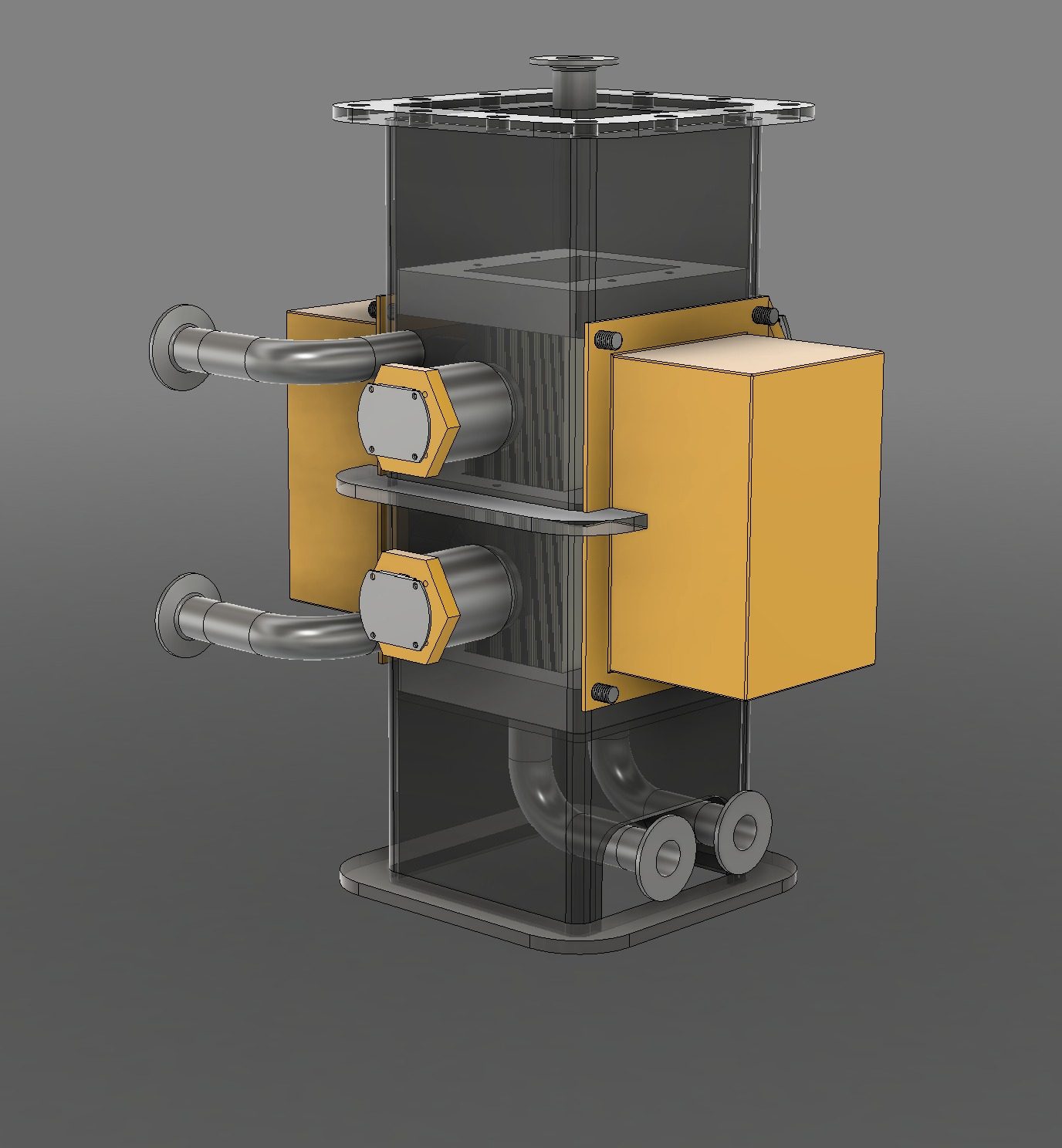
Light excites the Cu/ZnO catalyst surface, lowering the energy threshold for synthesis without extreme bulk temperatures. Quartz waveguides let UV and visible light reach the catalyst directly — something opaque steel vessels cannot do.
Ultrasonic cavitation accelerates mass transfer between reaction phases while plasmonic photocatalysis injects energy at the molecular scale — with direct analogues demonstrated on Cu/ZnO chemistry.
Low-pressure operation with well-characterised advantages in thermal management, per-pass conversion, and capital efficiency. No gas compressors. No 100-bar vessels.
Converts the hydro-slurry feedstock into hydrogen-enriched syngas using induced plasma. Because the plasma is induced rather than arc-driven, there are no consumable electrodes — and the design targets zero tar contamination, the classic failure mode of conventional biomass gasifiers. Currently at desktop prototype stage; proven microwave reforming carries commercial deployment in the meantime.
Combines the syngas with the photothermal and sono-plasmonic mechanisms to produce liquid methanol at low pressure. The benchtop Super Confluence Reactor — pictured above — layers fifteen distinct chemistry and physics inputs, each being tested one at a time to isolate its multiplier effect on yield. Both subsystems are independently maintainable and replaceable within a single MMR container.
Commercial deployment runs on proven modules from day one; advanced modules are output upgrades, not prerequisites. Capacity is added module by module — matched to confirmed demand, never committed years ahead of a customer.
We publish the discontinued line too. Module 3A taught us that photothermal synthesis works combined, not alone — and that lesson is built into 3B. Evidence over plans.
The MMR is fed a hydro slurry — milled woody biomass blended with water — injected straight into the gasifier. In the plasma field, both the biomass and the water dissociate, so the water contributes hydrogen rather than needing to be dried out. Moisture is a co-input, not a quality defect: the slurry handles anything from sawdust to agricultural waste with no expensive pre-drying, and the water phase doubles as the reactor's heat-management medium.
The verifiable performance figure is the input-to-output mass balance — feedstock in, methanol out, measured under continuous operating conditions at Arundel. External evaluators get full access to inputs and outputs; the internal mechanism stays proprietary. Three validation tracks run in parallel:
Harvey — former CEO of Methanex NZ and former Global VP of Manufacturing — is conducting independent due diligence on the technology and commercial position, an engagement that originated independently of CarbonLab.
Product purity certification against the industrial-grade methanol standard, with SGS New Zealand engagement in progress. Every batch from Arundel is tested, building the audit trail international buyers require.
Certification for compliant supply into FuelEU Maritime and RED III markets, engaged in parallel with commercial operations so it's awarded as soon as the operating data supports it.